Steel Prefab Homes - Worldwide Shipping

Prefab Homes for Vacation Rentals
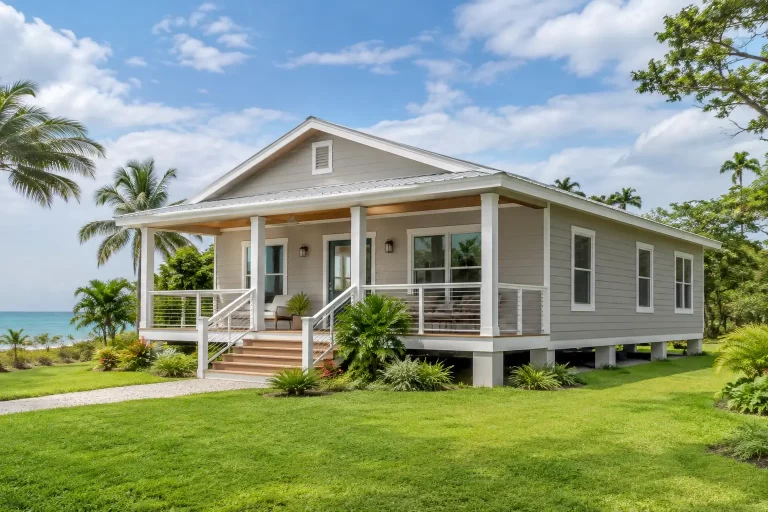
Prefab homes for vacation rentals combine steel strength, insulated walls, and adaptable layouts to help owners build durable, comfortable stays faster.
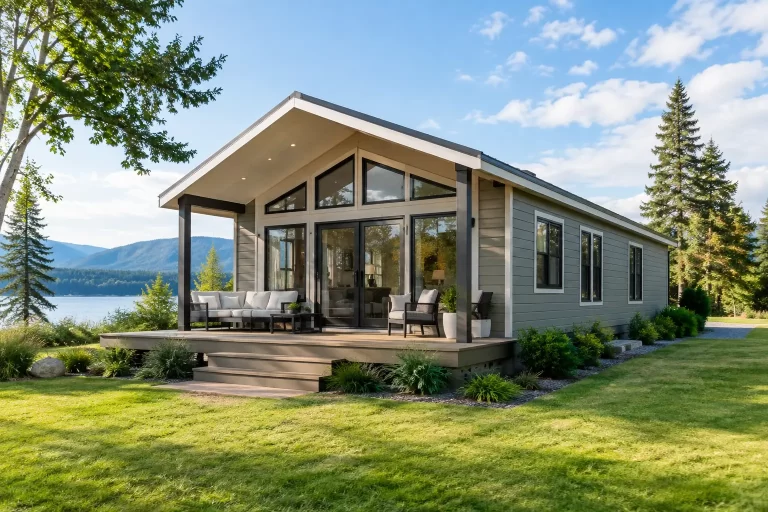
A vacation rental earns its reputation one stay at a time. Guests notice whether the bedroom stays cool after a sunny afternoon, whether walls feel solid in high winds, and whether the exterior still looks maintained after months of rain and salt air. For owners, prefab homes for vacation rentals offer a practical way to address those expectations with a construction system designed for speed, repeatability, and climate-aware performance.
The appeal is not simply that a prefab home can be assembled faster than a conventional build. A well-specified steel prefab system brings factory-controlled production, insulated wall assemblies, moisture-resistant exterior materials, and adaptable layouts into one coordinated package. That combination matters when a property must work as both a guest experience and a long-term investment.
Why vacation rentals need a different building mindset
A personal weekend home can be designed around one household’s habits. A rental property has a wider job. It must accommodate changing guest groups, frequent luggage movement, regular cleaning, and periods when no one is present to identify a small maintenance issue before it becomes a larger one.
That changes the design priorities. Durable finishes, straightforward circulation, useful storage, and bathrooms positioned for privacy often matter as much as the total square footage. In warm destinations, thermal comfort and moisture control are business considerations, not optional upgrades. A room that remains comfortable can support better reviews, repeat stays, and more confident pricing.
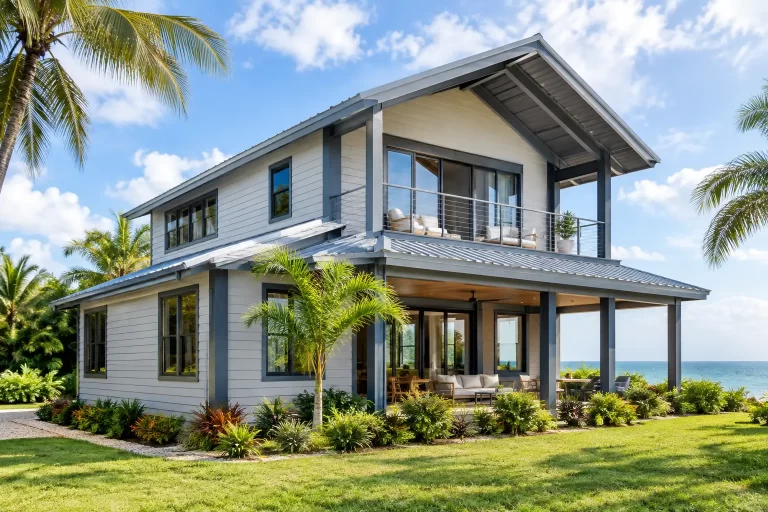
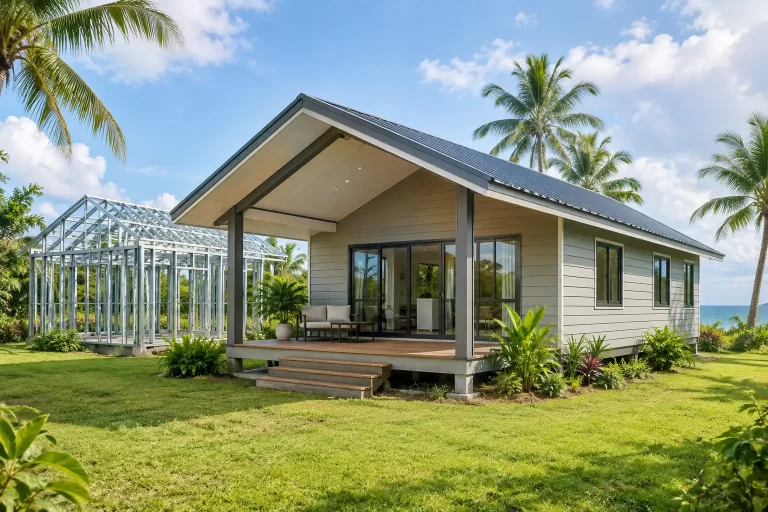
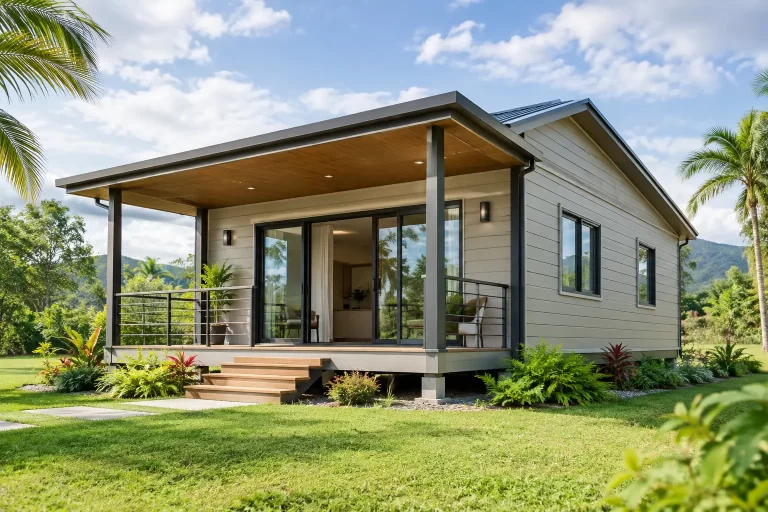
The building also needs to suit the operating model. A compact one-bedroom unit may perform well on a small site or as part of a group of rental cabins. A two-story prefab villa with several bedrooms, balconies, and multiple bathrooms may be better suited to family travel or premium group bookings. There is no single best layout. The right choice depends on the guest profile, local demand, site conditions, and the level of service the owner plans to provide.
What makes prefab homes for vacation rentals practical
A prefabricated home is not a temporary building by definition. Its long-term value depends on the structural system, materials, detailing, production quality, and how well the design responds to its climate. For vacation properties in tropical, coastal, and island locations, those factors should be evaluated together.
Light-gauge galvanized steel adds structural confidence
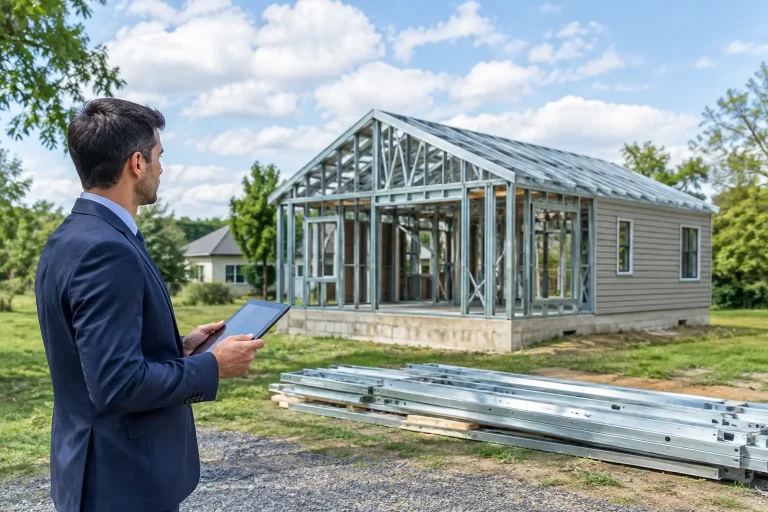
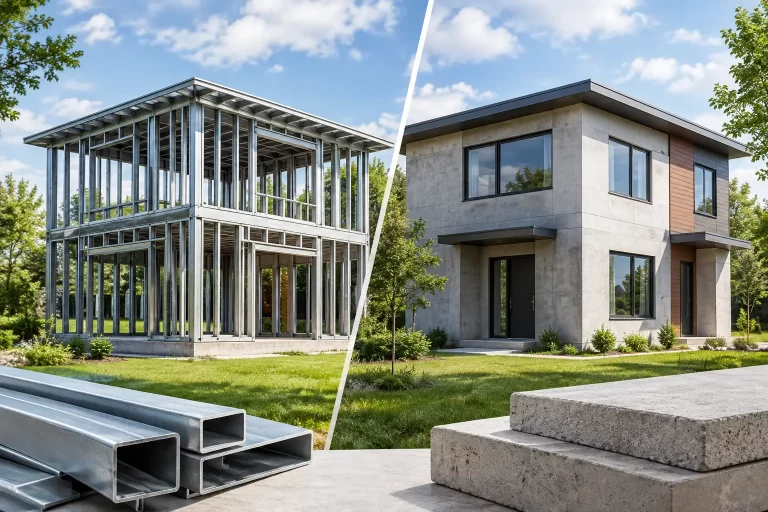
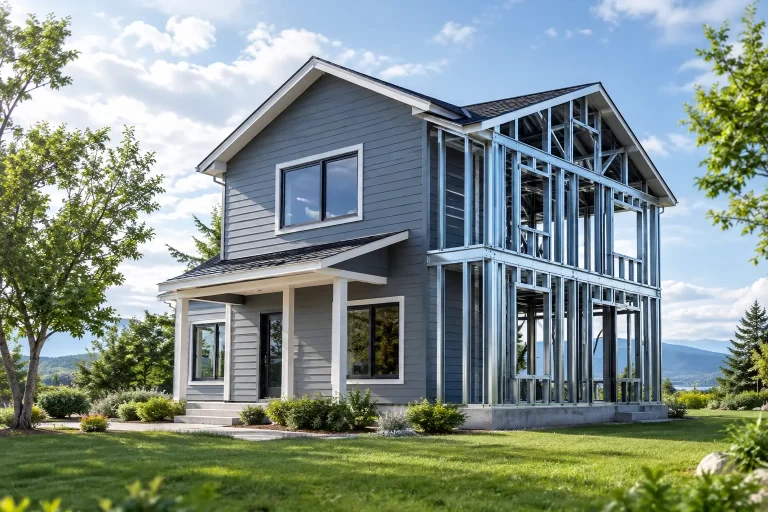
Light-gauge galvanized steel framing provides a strong, accurately manufactured structure without relying on timber that may be vulnerable to insects, moisture exposure, or dimensional movement. Steel components are produced to planned dimensions in the factory, helping create a more consistent starting point for assembly.
For regions exposed to earthquakes, seasonal storms, and demanding weather, structural design should always be matched to local engineering requirements and applicable codes. A steel prefab system provides a dependable framework for that process. It can be designed around the required loads while supporting the architectural details that make a rental property feel intentional rather than generic.
Insulation supports guest comfort and operating costs
Guests may not ask what is inside the wall, but they feel the result. Insulated wall and roof systems help reduce heat transfer, making interior temperatures easier to manage. This can improve comfort during hot days and support more efficient use of air conditioning.
Insulation performance is especially valuable for rentals because energy use can be less predictable than in an owner-occupied home. Guests may run cooling systems longer, open doors frequently, or use every room at once. A better-performing building envelope gives the mechanical system less work to do and helps create a more stable indoor environment.
Fiber-cement cladding is suited to humid climates
Exterior materials face the full force of the local climate. Fiber-cement cladding is a practical option for humid and rainy locations because it is resistant to moisture-related deterioration and does not provide a food source for termites. Combined with proper waterproofing details and a well-designed wall assembly, it supports a durable exterior that is easier to maintain over time.
This does not mean any exterior is maintenance-free. Coastal properties still need routine inspection, cleaning, and timely attention to sealants, coatings, doors, windows, and roof details. The advantage is choosing materials that begin with a stronger resistance to the conditions they will face.
Design for stays, not just floor plans
The most effective vacation rental layouts make arrival easy and daily use intuitive. Guests should be able to move from entry to living area, bedroom, bathroom, and outdoor space without awkward bottlenecks. A plan can be compact while still feeling generous when it has good natural light, sensible furniture zones, and a clear relationship between indoor and outdoor living.
For a single rental villa, an open living-kitchen area often creates flexibility for families and small groups. Bedrooms placed apart from the main social space can improve privacy. In larger homes, multiple bathrooms reduce morning congestion and make the property more suitable for groups traveling together. Balconies and covered terraces can add rental appeal, particularly where views or outdoor living are part of the destination.
Owners should also think about turnover. A small utility or storage area for linens, cleaning supplies, replacement items, and owner belongings can simplify operations. Durable interior finishes, accessible service routes, and uncomplicated room shapes make cleaning and maintenance more efficient between bookings.
Factory production improves planning, but it does not remove decisions
Prefab construction can reduce uncertainty because major building components are manufactured in a controlled environment and organized for transport and assembly. This approach can shorten the period of on-site construction and reduce the coordination burden associated with producing every element from raw materials at the property.
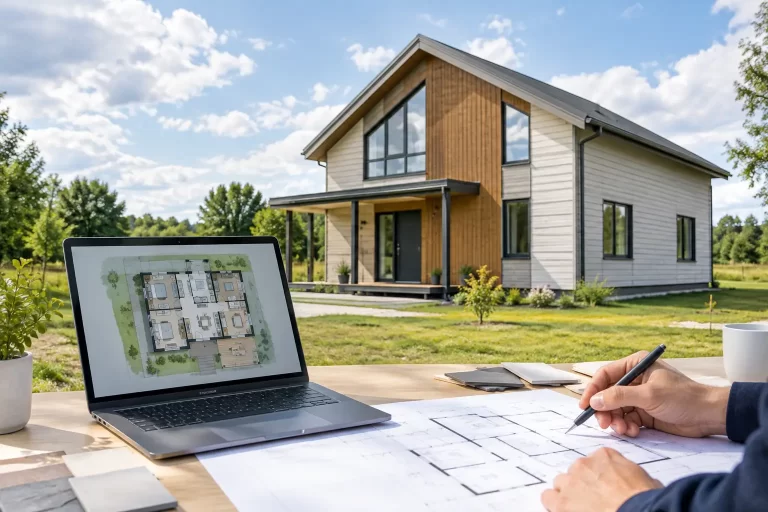
However, prefab is not a one-size-fits-all purchase. Owners still need to make early decisions about the number of bedrooms, bathroom configuration, window placement, exterior appearance, interior finishes, and the local requirements affecting the project. Earlier decisions are often an advantage because they allow the manufacturer to coordinate the building system before production begins.
For international projects, shipping organization matters as much as the house model. Components should be prepared for efficient transport, clearly organized, and supported by assembly documentation. An experienced manufacturer can adapt catalog-based designs to project needs while preserving the benefits of a repeatable building system. Bilka Prefab Homes applies this approach to steel house and villa projects intended for international destinations.
Choose the right scale for the investment
A rental development does not have to begin with a large resort. One well-designed prefab villa can test local demand, establish a rental brand, and create a model for future expansion. On the other hand, a multi-unit project can benefit from repeating a small number of proven layouts, which helps simplify furnishing, operations, and maintenance planning.
The trade-off is between variety and efficiency. Different unit types can appeal to more guest segments, but too many unique plans may complicate purchasing, repairs, and housekeeping. Repeating a reliable one-bedroom and two-bedroom model may be more operationally sensible than creating several highly customized units.
It is also wise to consider the rental calendar. A property intended for year-round use needs durable materials and ventilation strategies that perform through wet and dry seasons. A property aimed at peak-season travelers may prioritize outdoor entertainment areas and flexible sleeping capacity. The design should reflect the revenue strategy, not just the owner’s personal taste.
Questions to resolve before ordering a prefab rental home
Before selecting a model, clarify who the target guest is and what they will pay for. A honeymoon couple, a remote-working traveler, and a family of six need different room arrangements. Consider how many people can sleep comfortably, how luggage and supplies will be stored, and whether the kitchen, bathrooms, and outdoor areas match the expected length of stay.
Then evaluate the climate response. Ask how the wall system handles insulation and moisture, what exterior cladding is specified, how waterproofing is detailed, and how windows and doors are selected for local weather exposure. In island and coastal markets, these answers are central to durability.
Finally, examine the full delivery scope. Confirm the level of customization available, how components are packaged for international shipping, what assembly support is provided, and how the design will align with local approvals and engineering requirements. Clear answers at this stage protect both the build schedule and the investment.
A vacation rental should feel effortless to the guest, but that experience is built on careful choices behind the walls. A steel prefab home with the right insulation, exterior protection, layout, and production planning gives owners a stronger foundation for creating stays people want to book again.