Steel Prefab Homes - Worldwide Shipping

Prefab Supplier Evaluation Review for Buyers
Use a prefab supplier evaluation review to compare steel quality, insulation, design flexibility, shipping plans, and assembly support before ordering.

A low initial quote can hide the details that determine whether a prefab home performs well for decades or becomes an expensive site problem. A careful prefab supplier evaluation review looks beyond attractive renderings and floor-plan sizes. It examines the structural system, climate protection, manufacturing control, shipping method, documentation, and the supplier’s ability to adapt a building to the project.
For a home in a humid, coastal, tropical, or earthquake-prone location, those details are not optional. The right supplier should be able to explain how its house system handles moisture, heat, heavy rain, wind exposure, transport, and efficient on-site assembly in clear terms.
Start Your Prefab Supplier Evaluation Review With the Building System
Ask what actually forms the structure of the home. “Prefabricated” describes a method of production, not a single construction standard. Systems can vary significantly in framing material, insulation approach, wall build-up, exterior cladding, and connection details.
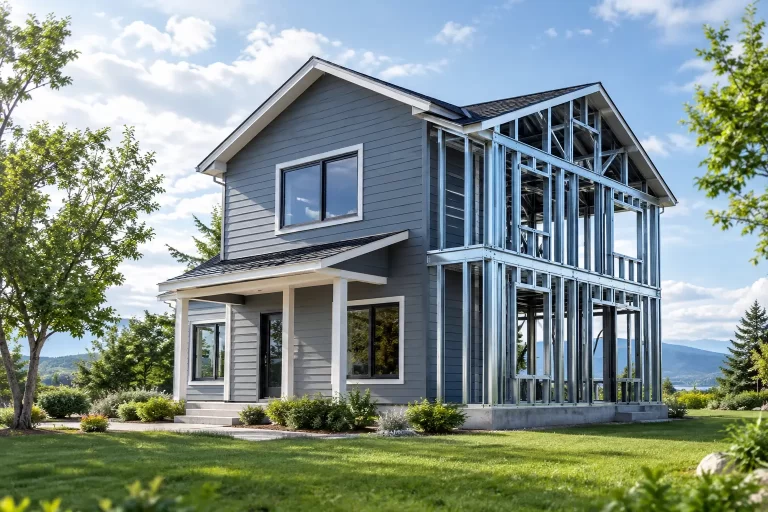
Light-gauge galvanized steel is a strong option for buyers who want consistent factory production and a durable structural frame. Galvanization helps protect steel against corrosion, while steel framing provides dimensional stability and does not warp, rot, or attract termites. These qualities are especially relevant in regions with high humidity and persistent insect pressure.
Still, material names alone are not enough. Ask the supplier to describe the frame profiles, steel thicknesses, corrosion-protection approach, wall layers, and how components connect. A reliable manufacturer can explain the system without relying on vague claims such as “premium quality” or “all-weather construction.”
The wall assembly deserves the same attention as the frame. A home’s comfort depends on how structural elements, insulation, exterior cladding, internal finishes, and waterproofing details work together. Insulated wall panels combined with moisture-resistant fiber-cement exterior cladding can support durable performance in wet climates, but the installation sequence and joint details matter as much as the materials themselves.
Review Documentation Before You Compare Prices
The most useful supplier comparison is based on like-for-like information. A lower-priced offer may include fewer components, a simpler wall system, limited drawings, or less coordination for shipping and assembly. Comparing only the total figure can lead to false savings.
Request a written scope that identifies what is included in the delivered prefab package. It should clarify the structural frame, wall and roof elements, insulation, exterior cladding, windows and doors where applicable, interior partitions, connection hardware, drawings, and packaging. If an item is not included, it should be stated clearly rather than left to assumption.
You should also ask for drawings that show more than a marketing layout. Floor plans are useful for understanding room arrangement, but elevations, sections, component schedules, and assembly information reveal whether the supplier has developed a complete construction system. For custom villas, rental units, or tourism projects, confirm that the drawings reflect the actual requested configuration rather than a standard catalog image.
A professional supplier will also address applicable project requirements early. Local permitting, wind conditions, seismic criteria, utility layouts, and architectural restrictions can affect a building design. The goal is not to expect one standard model to fit every destination unchanged. It is to choose a supplier that can identify which details need project-specific adaptation.
Evaluate Climate Protection, Not Just Appearance
A clean modern facade can look similar across many prefab offers. Its performance in tropical rain, salt-laden air, and high heat can be very different. Buyers should ask direct questions about water management, exterior durability, roof detailing, insulation, and ventilation planning.
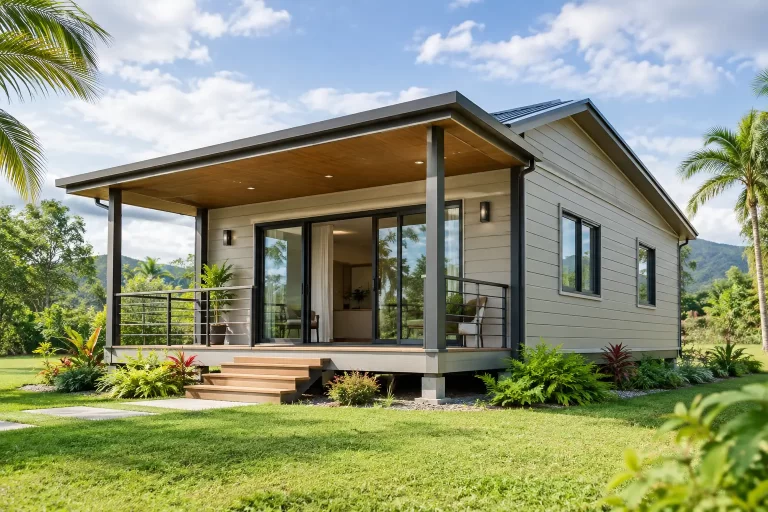
Fiber-cement cladding is widely valued because it is moisture-resistant, non-combustible, and suited to demanding exterior conditions. However, cladding must be supported by correctly designed layers and properly finished joints. Ask how openings, corners, roof-to-wall intersections, and penetrations are detailed to direct water away from vulnerable areas.
Thermal insulation should be evaluated for the way the building will be used. A permanently occupied family home, a weekend villa, and a high-turnover rental property may have different expectations for indoor comfort and operating cost. In warm climates, insulation helps reduce heat gain and can lower the burden on cooling systems. The best solution depends on the local climate, orientation, occupancy pattern, and the rest of the building envelope.
Coastal projects require an additional level of scrutiny. Salt exposure can accelerate corrosion on unprotected metals, so buyers should understand the protective strategy for the steel system, fasteners, external fixtures, and transport-stage packaging. A supplier should address this openly rather than treating every tropical destination as identical.
Check How Well the Supplier Handles Design Flexibility
Prefab construction is most efficient when it uses proven components, but efficiency should not force buyers into a layout that does not fit their land use, family needs, or investment plan. The strongest suppliers combine repeatable manufacturing with sensible design flexibility.
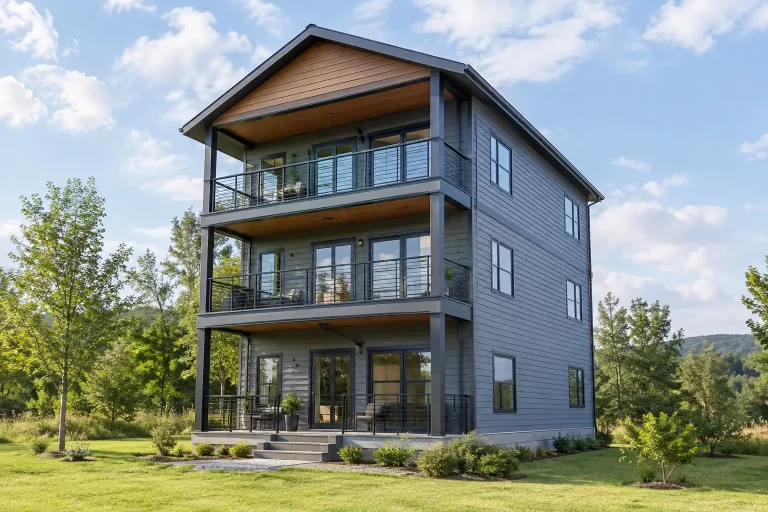
During your evaluation, ask whether the system can accommodate changes such as additional bedrooms, multiple bathrooms, a second kitchen, covered outdoor areas, balconies, larger living spaces, or mirrored layouts. Also ask where customization has practical limits. Honest limits are a positive sign because they show that the supplier understands how changes affect engineering, production, transport, and assembly.
For developers and hospitality operators, repeatability matters as much as customization. A supplier should be able to maintain consistency across multiple units while allowing selected variations in room layouts, facade treatments, or unit sizes. This balance can help a project retain a clear design identity without turning every building into a separate engineering exercise.
Assess Factory Control and International Shipping Experience
Prefab quality is established long before a shipment leaves the factory. Controlled production helps keep framing dimensions, component labeling, insulation placement, and panel preparation consistent. Ask how the supplier organizes quality checks, identifies parts, and prepares packages for assembly.
International deliveries add another layer of responsibility. Components need to be organized for container loading or other transport methods, protected during transit, and labeled so the assembly team can identify them efficiently. A supplier with export experience should be able to explain package organization, shipping documentation, loading plans, and how the building kit is sequenced for arrival.
This is particularly valuable for island markets, where freight capacity, port handling, storage time, and replacement-part lead times can influence the schedule. The cheapest shipping arrangement is not always the best choice if it creates avoidable delays, damaged materials, or confusion at the destination.
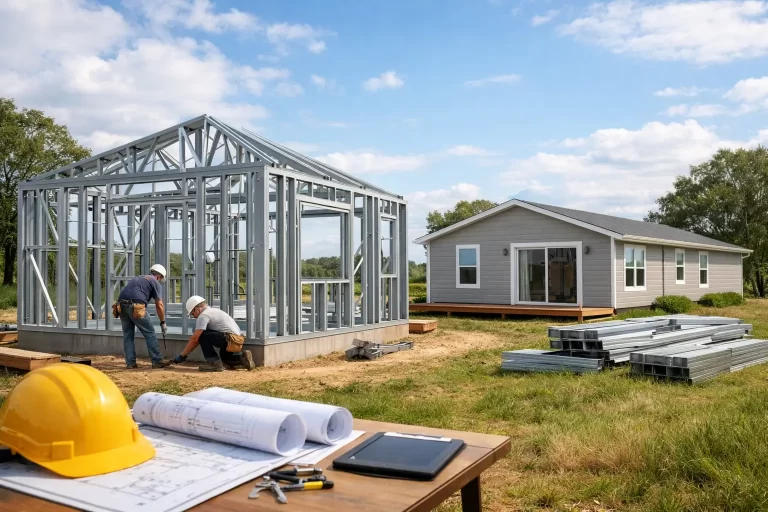
Ask who will provide technical support during assembly and what form that support takes. Detailed assembly drawings, labeled components, remote coordination, and clear responses to technical questions can make a major difference. The right level of support depends on the experience of the assembly team and the complexity of the building, but it should be defined before ordering.
Make the Final Decision on Evidence, Not Promises
A thorough prefab supplier evaluation review should leave you with a clear record of what each company is offering, how its system performs, and where its responsibilities begin and end. Use the same questions for every supplier, then compare written answers rather than relying on sales conversations.
Pay close attention to response quality. A dependable manufacturer answers technical questions directly, provides drawings and scope information, explains options realistically, and identifies decisions that must be made before production. Warning signs include unclear specifications, inconsistent answers, unexplained exclusions, and promises that a system can handle every climate or project without adaptation.
Price remains important, especially for an investment property or multi-unit development. But the better comparison is total project value: structural durability, energy comfort, resistance to moisture, manufacturing consistency, transport readiness, and support for the actual building configuration.
A prefab home should arrive as a coordinated construction system, not a collection of materials that must be figured out later. Choose the supplier that gives you the clearest technical answers now, because those answers are often what protect the performance, comfort, and long-term value of the home after assembly.