Steel Prefab Homes - Worldwide Shipping

How Prefab Home Shipping Reaches Your Site
Prefab home shipping brings a steel house system from factory production to your site with organized packing, export planning, and faster on-site assembly.
A prefabricated home is only as practical as the plan that gets it from the factory to your property. Prefab home shipping is not simply a matter of loading materials into containers. It is a coordinated process of production scheduling, component protection, export documentation, container planning, and site-ready delivery. When handled correctly, it keeps a steel home system organized from Kocaeli, Türkiye, to projects across the Caribbean and worldwide.
For homeowners, investors, and developers, this matters because shipping affects timing, budget predictability, and the condition of materials when installation begins. A well-prepared shipment arrives as a clearly identified building system, ready for efficient on-site assembly rather than a collection of difficult-to-sort construction materials.
What Is Included in Prefab Home Shipping?
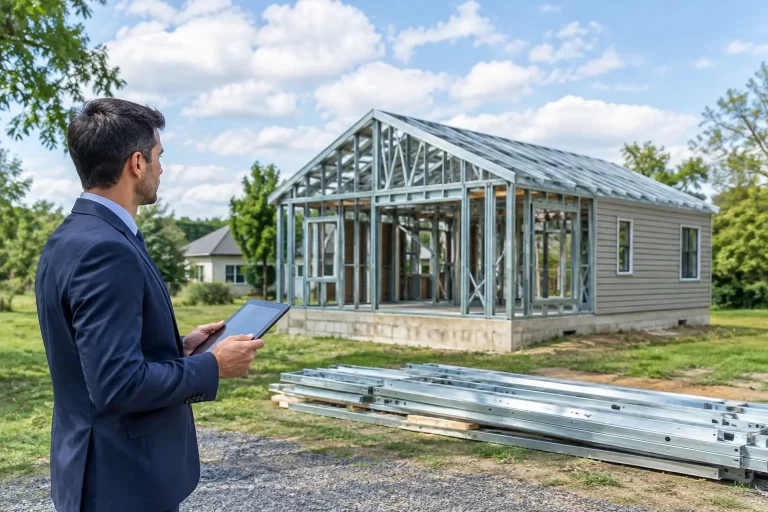
A galvanized steel prefab home is manufactured as a coordinated kit. Its light-gauge steel frame components are cut, formed, and prepared in a controlled production environment, then packed with the materials needed to create the building envelope and interior configuration.
Depending on the selected model and project specifications, a shipment can include structural steel members, insulated wall and roof panels, fiber-cement exterior cladding, roof materials, fasteners, doors, windows, interior partitions, and installation drawings. Customized homes may also include components for balconies, expanded living areas, additional bedrooms, multiple bathrooms, or separate kitchens.
The exact contents depend on the selected house design and the agreed project scope. A compact vacation home and a two-story villa do not require the same container plan, material quantities, or handling sequence. This is why shipping preparation should begin after the floor plan, dimensions, openings, exterior finish, and major options are confirmed.
Factory Packing Protects the System
Steel framing is valued for its strength, dimensional consistency, and resistance to many of the issues that affect traditional structural materials. During international transport, however, every component still needs protection from movement, moisture exposure, and handling damage.
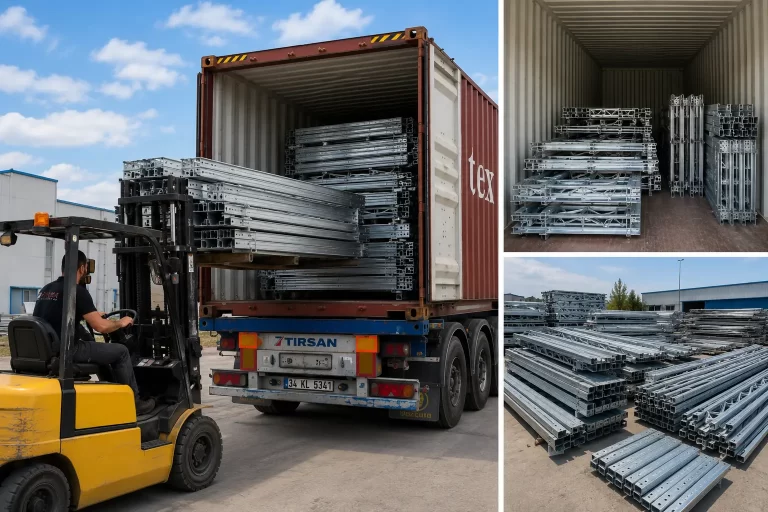
Components are grouped and packaged according to their role in the assembly process. Structural profiles are bundled securely, cladding and panels are protected to preserve finished surfaces, and smaller hardware is packed in labeled boxes or containers. Clear identification helps installation teams locate the correct parts without opening multiple packages or interrupting the work sequence.
This packaging discipline is especially valuable for projects in humid, coastal, or tropical locations. Galvanized steel framing, moisture-resistant fiber-cement cladding, and appropriate protective packing work together to support a durable result before construction even starts. The goal is not merely to transport materials, but to deliver a building system in usable condition.
Planning Prefab Home Shipping Before Production
The most effective shipping plan is created early, not after manufacturing is complete. Before a home enters production, the manufacturer and buyer should align on the delivery country, destination port, access conditions, local import requirements, and the intended installation schedule.
International transport commonly involves ocean freight, followed by inland delivery arrangements in the destination country. Transit times vary by destination, carrier schedules, seasonal demand, port congestion, customs procedures, and weather conditions. Buyers should view estimated sailing time as only one part of the overall schedule.
A realistic timeline also accounts for export preparation, vessel booking, port handling, customs clearance, and delivery coordination after arrival. For a tourism project or rental investment with an opening date, this planning margin can be as important as the manufacturing schedule itself.
Container Planning Affects Cost and Efficiency
A prefab house system may ship in one or more containers, depending on its size, design, and included materials. Container selection is based on volume, weight distribution, component length, and the need to protect finished items during transport.
Efficient loading can reduce unused space and help control freight costs. Yet the lowest apparent shipping cost is not always the best outcome. Over-compressing a shipment or mixing components without a logical unloading order can add time and confusion at the destination. The right plan balances container utilization with safe packing and practical site handling.
For larger villas or multi-unit developments, deliveries may be divided into several containers or organized in phases. This can support an orderly installation sequence, particularly when the project includes repeated house models. It also makes it easier to track materials across a broader development schedule.
Documentation Keeps International Delivery Moving
Shipping a prefab home internationally requires accurate documentation. Typical export and transport paperwork may include the commercial invoice, packing list, bill of lading, certificate of origin where required, and product information requested by the destination country.
The buyer should also review local rules before ordering. Some locations require specific permits, engineering review, import registrations, or compliance documents for residential construction products. Requirements differ between countries and can also vary by municipality, island, or project type.
Early coordination reduces avoidable delays. A complete packing list, for example, helps customs authorities and receiving teams understand what is inside the shipment. It also gives the buyer a practical reference when materials are checked after delivery.
Bilka Prefab Homes prepares factory-manufactured steel house systems for international delivery with project-specific packing and documentation support. For buyers, the value is a clearer path between final design approval and a shipment that can be received and assembled with confidence.
Receiving the Shipment at the Destination
Arrival at the port is a major milestone, but it is not the final step in prefab home shipping. The receiving process should be organized before the containers reach the destination. This includes confirming who will manage customs clearance, how containers will be collected, where materials will be placed, and which team will inspect the shipment.
When the container is opened, the receiving team should compare visible package labels and quantities with the packing list. Any signs of transit damage should be documented immediately, ideally before materials are moved. This straightforward inspection protects the project and helps preserve a reliable assembly schedule.
Storage conditions also deserve attention. Materials should remain dry, organized, and protected until they are needed. Finished cladding, insulation, windows, doors, and hardware should not be left exposed unnecessarily. A clean staging area and a logical unloading sequence make it easier for installers to begin work efficiently.
Assembly Drawings Turn Packages Into a Home
The value of a prefab system comes from coordination. Each steel frame member, panel, fastening detail, and exterior component has a position in the completed structure. Installation drawings and labeled components give the assembly team a clear sequence for building that structure accurately.
Light-gauge galvanized steel is particularly suited to this approach because members are manufactured to defined dimensions. This supports cleaner alignment and reduces the variability often associated with cutting structural materials on site. Once the structural frame is assembled, the insulated wall and roof systems, fiber-cement cladding, and weather-protective layers create the durable exterior needed for demanding climates.
Assembly speed still depends on the experience of the local installation team, weather conditions, material access, and the complexity of the home. A simple single-story design can move quickly, while a customized two-story villa with balconies and multiple wet areas requires more coordination. Prefabrication shortens and organizes the building process, but it does not eliminate the need for skilled workmanship.
Why Shipping Quality Matters for Long-Term Performance
A home intended for coastal, rainy, humid, or earthquake-prone regions needs more than an attractive floor plan. Its structural and exterior systems must work together from the first day of installation. Shipping is part of that performance chain.
Properly packed galvanized steel framing arrives ready to form a strong, lightweight structure. High-insulation wall and roof systems help create more comfortable interiors and can reduce dependence on constant heating or cooling. Fiber-cement cladding provides a durable exterior surface suited to moisture-prone conditions when installed as specified.
For investors, this coordination has a financial benefit. A shipment that is complete, documented, and easy to organize can reduce idle time between delivery and assembly. For homeowners, it provides greater confidence that the house they approved on paper is arriving as a complete system, not as a vague promise of materials.
The strongest prefab projects begin with a practical question: how will every component travel, arrive, and be assembled into a finished home? When that question is answered early, prefab home shipping becomes a controlled part of the construction plan – supporting a faster route to a durable, comfortable steel home built for its location.